Chelmsford Floor ScreedingChelmsford Floor Screeding

Screed for underfloor heating

The screed is what turns underfloor heating pipes into a warm floor. It needs the right depth over the pipes, full contact around them and a careful first heat-up, otherwise you risk cold spots, cracking or a floor that takes months to dry.

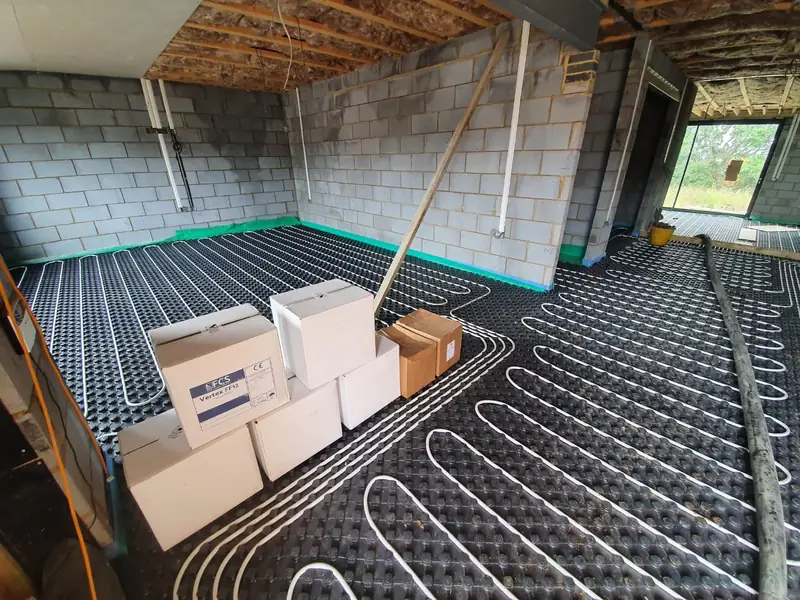
Underfloor heating pipes clipped to insulation panels with edge strip fitted, ready for screed

At a glance

Cover over pipes
Sand and cement: at least 25 mm (65 mm total floating). Liquid: per manufacturer, typically thinner
Before pouring
Pipes clipped, pressure-tested and left under pressure; edge strip and membrane in place
First heat-up
Gradual, following the screed manufacturer, never at full temperature straight away
Best systems
Liquid screed for heat transfer and speed; fibre sand and cement where preferred

We work alongside your heating installer

Many of our jobs start with a floor covered in pipe loops, like the photographs on this page. Before we pour, we check that the pipes are fixed securely so they cannot lift, that the system has been pressure-tested, that edge insulation runs around every wall and that the manifold area is protected. Getting this right is what makes the screed perform.

Liquid or sand and cement over UFH?

A flowing liquid screed fully encapsulates the pipes and can be laid thinner, so the floor responds faster and heats more evenly. A fibre-reinforced sand and cement screed is a dependable alternative, particularly on smaller areas. We recommend the system based on your heating design, build-up height and programme.

The commissioning heat-up

Underfloor heating should not be turned up to full temperature on a new screed. The heating is introduced gradually after the minimum curing period, raised in small steps and held, then reduced again before floor coverings are fitted. We give you the right schedule for the screed we lay.

  • Pressure-test the pipework before and during the pour
  • Keep the screed protected from rapid drying and draughts for the first days
  • Follow the staged heat-up programme before laying the floor finish
  • Moisture-test before tiles, LVT, wood or carpet go down
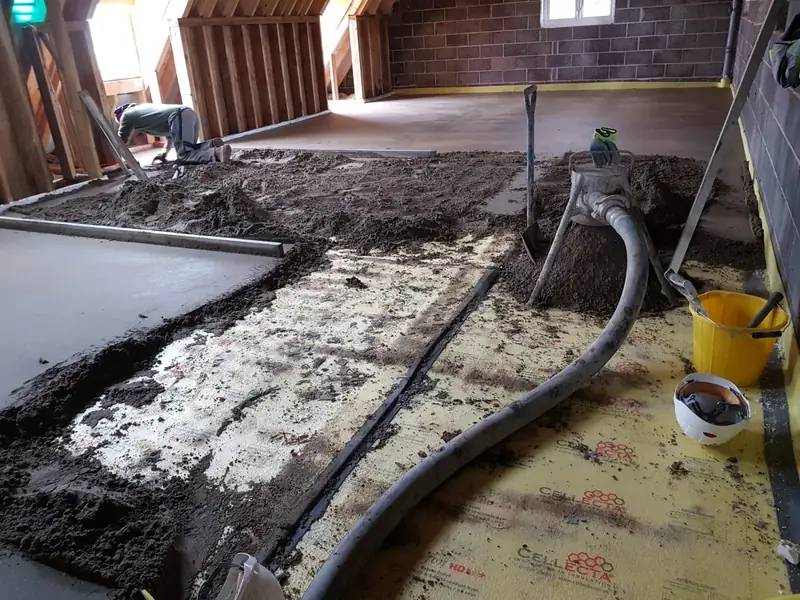
Screed being pumped by hose over underfloor heating pipework, with the first section already levelled
Ben Phillips, director of Chelmsford Floor Screeding Ltd, on site

Who you’re dealing with

Ben Phillips, Director

Most of our reviews mention Ben by name: he prices the work and is on site with the team.

About us

20+ years
screeding experience; limited company since 2015
Qualified
CSCS-carded, pump-trained operatives with NVQs
4.8★ on Google
48 Google reviews
Registered company
Chelmsford Floor Screeding Ltd, company no. 09623631

Common questions about underfloor heating screed

What is the best screed for underfloor heating?

For most homes, a liquid calcium sulphate screed gives the best heat transfer, flatness and speed. A fibre-reinforced sand and cement screed is a good alternative where a cement-based floor is needed or the area is small.

How deep should screed be over underfloor heating pipes?

For sand and cement, at least 25 mm above the pipes and around 65 mm overall when floating over insulation. Liquid screeds can usually be thinner; the product manufacturer sets the minimum.

When can I turn the underfloor heating on?

Only after the minimum period stated for the screed, then gradually. Sand and cement screeds commonly need around 21 days first; many liquid screeds allow it after about 7 days. We give you the exact schedule.

Tell us about your floor

Send the postcode, rough floor area and what is going on top. We will come back with a price, usually the same or next working day.