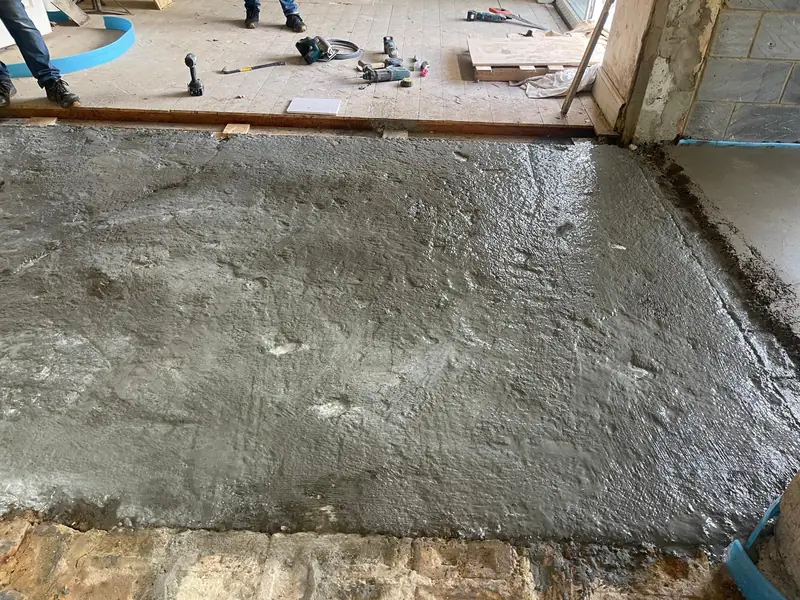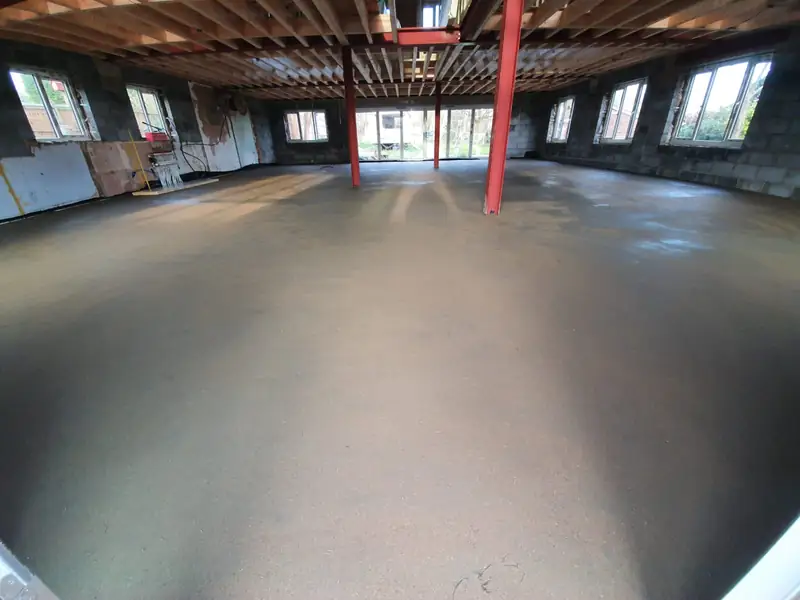
Laid by hand, finished by eye and level
Most of the floors in our gallery are traditional screeds. We set levels from a datum, run screed rails, then pump or barrow the mix in, compact it and rule it off to level before trowelling the surface ready for the next trade. Our CSCS-carded operatives are pump-trained, which lets us place large volumes quickly without compromising compaction.
Bonded, unbonded and floating screeds
A bonded screed is fixed to a prepared concrete base with a bonding agent and can be thinner. An unbonded screed sits on a damp-proof membrane and needs more depth. A floating screed is laid over insulation, which is the usual build-up in extensions and new builds, and needs the most depth so it does not crack under load. We confirm the right depth for your construction before quoting.
Fibre screed
Adding polypropylene fibres to the mix helps control early-age shrinkage cracking. It is a common upgrade for floating screeds and floors over underfloor heating, and we can advise whether it is worthwhile for your project.
When it is the right choice
- Smaller rooms, corridors and extensions where a liquid screed pump visit is not economical
- Bonded screeds onto existing concrete slabs
- Floors that need falls, for example wet rooms and some outdoor areas
- Projects where the finished floor needs a cement-based substrate